
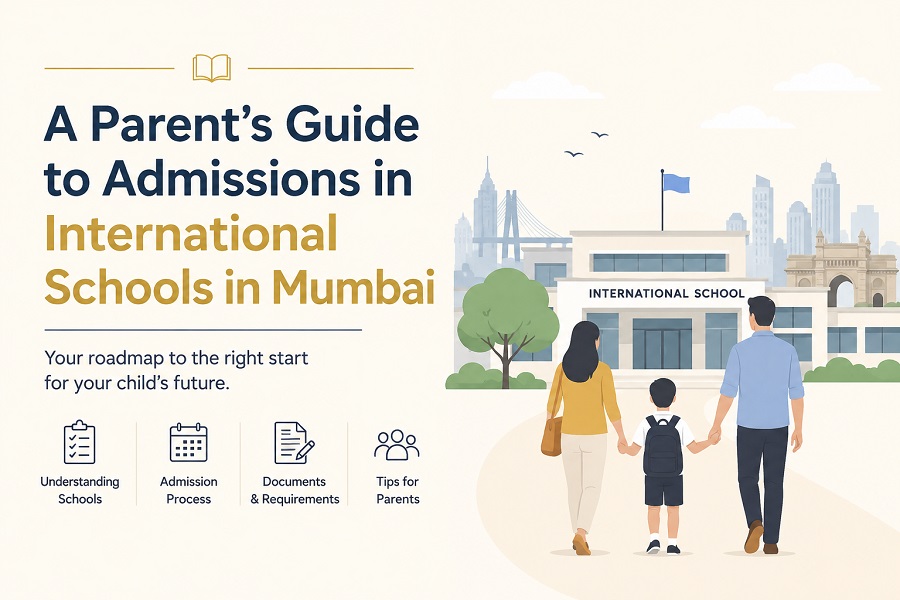
Choosing the right school is one of the most important decisions parents make for their child’s future. With the growing demand for global education, many families are now exploring international schools in Mumbai that offer world-class learning environments, modern teaching methods, and internationally recognized curricula. From inquiry-based learning to strong extracurricular exposure, these schools are shaping students into confident and future-ready individuals.
Parents looking into international schools in Mumbai often come across a variety of curricula such as the International Baccalaureate (IB), IGCSE, and other globally aligned programs. These educational frameworks focus on critical thinking, creativity, communication, and real-world application rather than rote memorization. As competition for admissions increases each year, understanding the admission process can help families make informed and timely decisions.
The first step is researching schools based on your child’s needs and long-term academic goals. Some schools specialize in early childhood learning, while others provide a complete learning journey from primary to higher secondary education. Parents should evaluate factors such as curriculum, campus environment, teacher-student ratio, extracurricular activities, location, safety standards, and university preparation support. Visiting campuses and attending school orientations can provide valuable insight into the school culture and teaching philosophy.
Most international schools begin their admission cycle several months before the academic year starts. It is advisable for parents to begin shortlisting schools early to avoid missing deadlines. Many schools offer online enquiry forms, followed by interaction sessions, assessments, or campus tours. Keeping all required documents ready in advance can make the process smoother. Commonly requested documents include birth certificates, previous academic records, passport-size photographs, address proof, and transfer certificates where applicable.
For younger children, admissions are usually based on age eligibility, observation rounds, or interactive sessions rather than formal testing. Schools often focus on communication skills, social interaction, curiosity, and overall developmental readiness. Parents may also be invited for discussions to understand the child’s background, learning preferences, and family expectations.
For middle and senior grades, schools may conduct entrance assessments in subjects such as English, Mathematics, and Science. These evaluations help schools understand the student’s academic preparedness and learning style. Some schools also schedule personal interviews to assess confidence, communication abilities, and adaptability. Preparing children calmly and positively for these interactions can significantly improve their comfort and performance.
Another important aspect to consider while applying to international schools in Mumbai is curriculum continuity. Families planning long-term education pathways should look for schools offering seamless progression across different academic stages. This allows students to transition smoothly from primary years to higher grades without adjusting to entirely new systems or methodologies.
Parents should also evaluate how schools support holistic development. Strong international schools focus not only on academics but also on sports, performing arts, leadership activities, community service, and technology integration. Exposure to diverse experiences helps students build confidence, collaboration skills, and global perspectives from an early age.
Financial planning is equally important during the admission process. International education often includes tuition fees, registration charges, activity fees, transportation costs, and learning resources. Understanding the complete fee structure beforehand can help parents make practical decisions. Some schools may also offer scholarships or merit-based support for higher grades.
Communication with admissions teams can make the process far less stressful. Parents should feel comfortable asking questions about curriculum structure, classroom environment, student wellbeing, university guidance, and extracurricular opportunities. Open communication helps families gain clarity and confidence before finalizing a school.
In conclusion, finding the right fit among the many international schools in Mumbai requires careful planning, research, and timely action. A supportive learning environment combined with globally recognized education can create strong foundations for academic and personal success. By understanding the admissions process and focusing on their child’s individual needs, parents can confidently choose a school that nurtures curiosity, growth, and future readiness.