How independence, problem-solving, communication, and practical life skills help Montessori students thrive far beyond the classroom.
Education is about much more than memorizing facts or completing assignments. True learning prepares children to think independently, solve problems confidently, communicate effectively, and adapt to new situations throughout life. While academic performance certainly matters, many parents today are also looking for schools that help children develop resilience, curiosity, leadership, and emotional intelligence alongside traditional academics.
Montessori education was designed with this broader vision in mind. Rather than focusing solely on test scores or rigid classroom structures, Montessori classrooms emphasize real-world skill development through hands-on learning, independence, collaboration, and self-motivation. Children are encouraged to become active participants in their growth from an early age.
At KV Montessori, students are supported in developing both strong academic foundations and the life skills needed to succeed in school, relationships, future careers, and everyday problem-solving.
“Montessori education focuses on helping children become capable, confident individuals, not just successful students.”
Independence Becomes Part of Everyday Learning
One of the most recognizable features of Montessori education is the emphasis on independence. Children are encouraged to make choices, complete tasks independently, and take responsibility for their learning environment from an early age.
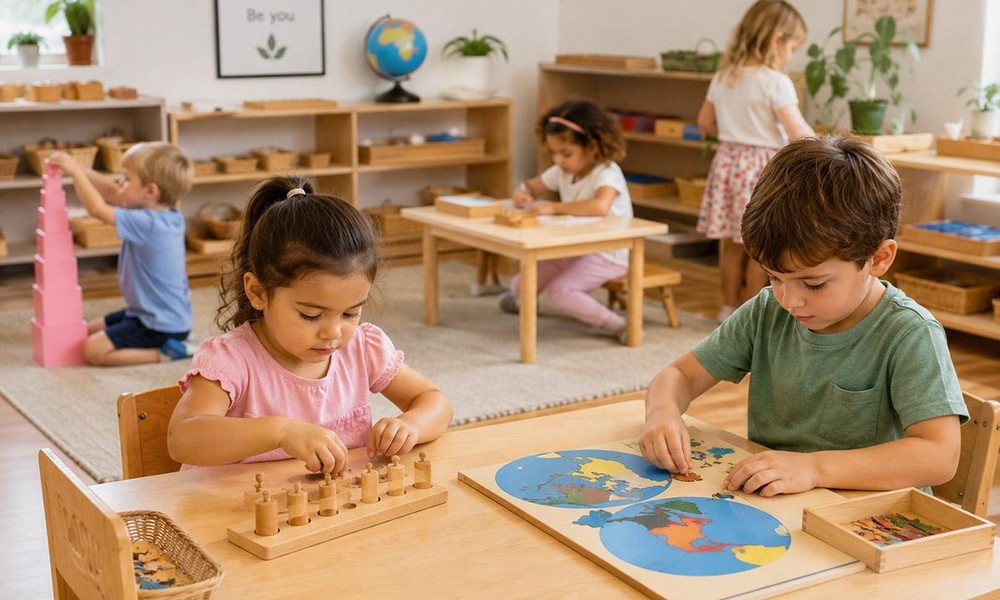
In many Montessori classrooms, students select activities independently, manage materials responsibly, clean up after themselves, and move through lessons at their pace. These may seem like small daily routines, but they build confidence and self-discipline over time.
Practical life activities play a major role in this process. Young children practice pouring, organizing, preparing snacks, tying shoes, cleaning tables, and caring for classroom materials. These exercises strengthen fine motor skills while also teaching responsibility, patience, and self-sufficiency.
As children grow older, this independence expands into academic problem-solving, time management, and leadership abilities. Instead of relying entirely on adult direction, students learn how to think critically and make decisions confidently.
These are the same qualities that later support success in college, careers, and personal relationships.
Montessori Encourages Strong Problem-Solving Skills
The real world rarely provides step-by-step instructions for every challenge. Montessori education helps prepare children for this reality by encouraging exploration, experimentation, and critical thinking.
Rather than immediately correcting mistakes, Montessori teachers often guide students toward discovering solutions independently. Many classroom materials are designed with built-in self-correction systems that help children recognize errors on their own.
This approach changes the relationship children have with mistakes. Instead of fearing failure, students begin viewing challenges as part of the learning process.
Problem-solving becomes active rather than passive. Children analyze situations, test ideas, adapt strategies, and learn persistence through repetition and exploration.
Montessori classrooms also encourage open-ended learning experiences where there may be multiple ways to approach a task or arrive at a solution. This flexibility strengthens creativity and cognitive adaptability, skills that are increasingly valuable in modern professional environments.
Communication and Collaboration Are Constantly Practiced
Although Montessori classrooms support independent learning, they also place strong emphasis on respectful communication and collaboration.
Mixed-age classrooms naturally create opportunities for peer mentorship. Younger students observe and learn from older classmates, while older children strengthen leadership skills by helping guide younger peers.
Children regularly practice listening, conflict resolution, cooperation, and respectful discussion during daily classroom interactions. Instead of constant competition, the environment encourages mutual support and shared learning.
These social experiences help children become more emotionally aware and comfortable interacting with different personalities and age groups.
Strong communication skills are critical in virtually every area of adult life, including leadership roles, teamwork, customer service, and professional collaboration. Montessori classrooms help children build these abilities naturally through daily practice rather than isolated instruction.
“The ability to communicate, adapt, and solve problems confidently often matters just as much as academic knowledge itself.”
Montessori Helps Build Focus and Self-Motivation
Modern children are growing up in environments filled with constant digital stimulation and distraction. Developing concentration has become increasingly important and increasingly difficult.
Montessori classrooms are intentionally structured to support deep focus. Children are often given uninterrupted work periods that allow them to engage fully with activities without constant transitions or interruptions.
Because students frequently choose their work independently, motivation becomes more internal rather than externally driven by rewards or pressure. Children learn to pursue mastery because they are genuinely engaged, not simply because they are being told to complete an assignment.
This internal motivation can have long-term benefits academically and professionally. Adults who can focus deeply, manage their time, and stay self-directed are often better equipped to handle complex responsibilities and changing environments.
Montessori students also learn organizational habits naturally through classroom routines that emphasize order, preparation, and responsibility for materials.
Real-World Skills Extend Beyond Academics
Montessori education recognizes that life success involves emotional, practical, social, and intellectual development working together.
Children are encouraged to respect their environment, care for others, manage responsibilities, and contribute meaningfully to their community. They learn that their actions have consequences and that independence comes with accountability.
Many Montessori students develop strong confidence speaking with adults because classrooms encourage respectful interaction and self-expression from an early age.
Adaptability is another major strength. Because Montessori classrooms emphasize flexibility and individualized learning, students often become comfortable navigating new situations and solving unfamiliar challenges independently.
These qualities continue benefiting students long after graduation, whether they pursue higher education, entrepreneurship, creative careers, healthcare, technology, business, or countless other paths.
FAQs
Does Montessori education prepare children for traditional schools?
Yes. Montessori students often transition successfully because they develop strong independence, concentration, and problem-solving abilities.
Why are mixed-age classrooms important?
Mixed-age environments encourage leadership, mentorship, collaboration, and social development.
Do Montessori students learn discipline?
Yes. Montessori discipline focuses on self-regulation, responsibility, and internal motivation rather than external punishment.
Can Montessori help shy children build confidence?
Many shy children become more confident in Montessori settings because they are encouraged to work independently and communicate respectfully at their own pace.
Schedule a Tour at KV Montessori
Families seeking an educational environment that supports independence, critical thinking, confidence, and long-term personal growth can explore the benefits of Montessori education at KV Montessori. Through hands-on learning and individualized instruction, students develop the practical and academic skills needed to thrive both inside and outside the classroom. Schedule a tour today to see how Montessori learning prepares children for real-world success.